Friday, May 7, 2010


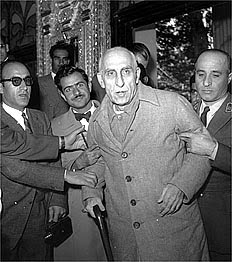
The book All the Shah’s Men, by Stephen Kinzer, is an account of the coup that happened in 1953, which was organized and done by American and British intelligence. The result of the coup was to instill the Shah of Iran for 25 years up until 1979 when there was a revolution. The influence of foreign involvement in Iran is a point of contention marked by turmoil and conflict. In the 1950s Iran was attempting to rule itself with Mosadegh as the prime minister. This is after a history of oppressive leaders which the Iranians were unhappy about. Britain was unhappy about the looming nationalization of Iranian oil and the Americans were nervous of the Communist influence. Under these two excuses the countries banned together to overthrow Mosadegh. The interference of the British and American government in Iran should never have happened. It seems that this whole battle against Mossadegh was more than just against this one man. It was against an entire country that after years of oppression and terrible rulers finally had voted democratically on who the best man was. Mossadegh was a fair man; he worked hard against the years of incompetent and corrupt government. He wanted to restore Iran to what it once was, a peaceful and advanced nation. After finally removing Mossadegh, and the first democratically elected government Iran was ruled for the next twenty-five years under the dictatorship of Mohammad Reza Shah. Mohammad Reza Shah was only able to rule by force and relied heavily on his Secret Service to keep him in power. Finally in 1979 he was overthrown. What I find poignant about this book is the idea of American involvement in Iran. Even after reading this book I am still not completely sure as to why they were involved. What exactly did it prove or solve?
I attached this video of Mosadegh's home which is interesting to watch after reading the book. (Even if I can't understand what they say!)

the Forgotten Fire


Reading the book Forgotten Fire was extremely difficult, but looking at the image at left makes it even more realistic and horrible. However it is important to see the realities of what happened in the world. The genocide of the Armenian people by the Turks in 1915 is a horrific event that is often skipped over in history. Forgotten Fire by Adam Bagdasarian opens with a quote in the epigraph made by Hitler in 1939 “Who does now remember the Armenians?” correctly describing how the genocide of an entire group of people is not remembered or discussed twenty years later. The point of view of the book is that of a child’s, Vahan Kenderian, who does not see that there were any problems between the Turks and the Armenians and in fact does not see any differences between them except that they go to different places of worship. Vahan lives in Armenia during the period predating the Genocide with his family, his mother and father, his grandmother and uncle, Mumphre, his brothers, Sisak, Tabel and Diran and his sisters Oskina and Armenouhi. Vahan experiences three major aspects of his life in the book, the beginning when he is complacent about his life and does not understand what is happening, the second part where he is struggling to survive and the last when he is searching and has found freedom. Through the view of Vahan his experiences of the genocide can be experienced and the atrocities endured by the Armenian people are brought to life. Vahan was very lucky because he was able to escape several times from death. One particularly poignant scene is when he was walking through town and people thought he was a ghost because Armenians by this point a couple years later were so rare. Although Vahan escaped from the death march he was still forced to endure more horrific moments, constantly hiding for fear of being murdered and people taking advantage of him. At one point he is forced to go back to his home and work for Selim Bey who is known as a top Armenian Killer by putting hooves on the feet of people with burning hot steel. The utter humiliation of working for Selim Bey is not understood by Vahan because of his desperation to survive. Vahan like many Armenians were forced to lead a life of fear and survival suffereing the humiliations like these because they were driven out of their homes. Forgotten Fire is not only a story of a young boys survival but it brings into graphic detail and reality the consequences of hatred based on ethnicity.

http://www.danegerus.com/weblog/images/ArmenianGenocide.jpg

The Janissary Tree


The Janissary Tree by Jason Goodwin is the story of Yashim a eunuch in the Ottoman Empire during 1836 trying to solve the mystery or terrible murders happening inside the Harem and to the members of the New Guards. The early 19th century was a time of great changes in both Europe and the Ottoman Empire. In Europe this was the time of the enlightenment where there were great social and scientific changes in the way they viewed the world. In the Ottoman Empire the influence from Europe was becoming greater and greater. Conversely many people disliked the European influence and wanted to revert to the old ways and customs, they felt that modernity was not going to help the Ottoman Empire. In The Janissary Tree both new influences and old customs of the Ottoman Empire during 1836 can be learned. The Ottoman Empire was in what historians would call a declining period. But through the Janissary Tree it is evident that the people living their lives had no evidence of this happening. Clearly they just lead their lives as they would everyday without knowledge or feelings of things going wrong. If anything there seemed to be a feeling changes going upward with the influence of European technology. The Russians had a lot of interest in the Ottoman Empire and had their embassy there almost as a way to spy on them. While the Ottoman’s had influences of change and modernization Europe also had the Ottomans on their minds. They had a great influence on their decorations and art as well as a military fear of them. Europeans had a great deal of influence on the Ottoman Empire during the 19th century and onward but did not change everything about life. Many people believed that instead of becoming European they should really go back to the old tardyons and become more Muslim. However, the Sultans did not listen to this and pushed for a Westernized society and many clothes and languages from Europe became popular.


The image above is of the Topkapi palace, where a large part of the book takes place.


This image from 1982 of the Janissary Tree!

Thursday, May 6, 2010


I just wanted to share a few thought about the Red Apple. This historical novel, the Red Apple, begins with Manuel, a young Christian boy tending his flock of sheep. Manuel must take part in the devshrime where the Ottoman troops take Christian boys and enslave them to the Janissaries. Although Manuel does not seem to have much promise to be a good fighter he is taken into the troops and sent to Edirne where he is converted to Islam and then sent on to a trainer. He is fortunate that his trainer Mahmut is a compassionate, educated man and treats him well. With Mahmut Manuel, now Ibrahim learns about Islam and about the importance of loyalty to his superior, he understands that his loyalty is first towards the Sultan and his nation and second to Mahmut. After seven years of studying and working for Mahmut, when Ibrahim has accomplished what Mahmut expected of him he is made to join the Janissaries barracks. As he is joining the ranks Mahmut dies and it becomes evident that not all of the Janissaries had the same type of trainer. Most of the others were abused and ill treated. Ibrahim quickly makes an enemy with Semsi and friends with Ahmet. These two make political use of Ibrahim throughout the rest of the novel. In Jonathan Levintan’s the Red Apple we are given an insight into the way people lived and the political situation in Turkey during the fifteenth century. Although the Red Apple is the story of Ibrahim growing up and finding himself it is also an important source of information about the lives of Janissaries. Because they were slaves they lacked the right to a personal life but had many more rights than most people. They were able to gather great riches and had the power to move up through the military ranks. This lead to a lot of political ambition and insecurity. Because as young boys they were treated badly they seem to make up for it when they are older and treat others who cannot help them with contempt. Although the Janissaries had a rough life because in battles they never knew if they would die or not, life for the common people seemed even more uncertain. They never knew if they would be attacked at any point and seemed to be constantly afraid of the Janissaries. All in all, life according to The Red Apple seemed to be very difficult and without very many freedoms.


I found the image here: http://blog.thefoundationstone.org/wp-content/uploads/2009/08/070102janissaries.jpg

Different Veils

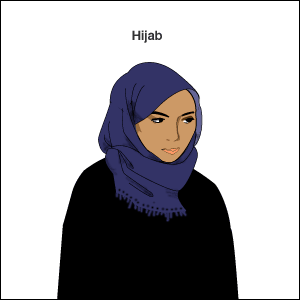
Pretty recently there was a lot of scandal in France with President Sarkozy trying to have parliament ban the veil. There is also an instance in Nantes where a woman cab driver was stopped because she was wearing a veil and the police said that it obstructed her view. So I became curious about the veil. What does it mean? Why do women wear it? Should they be banned? There is always the idea that the veil is oppressive towards women, and I have found myself thinking that if men have a problem with it perhaps they can just look away. But the idea of the veil obviously goes much deeper than that, and the opinion of someone who has no idea about it really makes no difference. So first I wondered what the different kinds of coverings were. The BBC had a great explanation


The Hijab is the most commonly veil seen in the West, to me it reminds me of someone wearing a cross, a reminder that they are religious to the outside world. The Burka is probably the most shocking to see, the woman is completly covered except for a mesh screen to see from. I seriously do not think that wearing a veil is a terrible thing as long as it is a personal choice made by the woman. If she is pressured to wear a certain thing by any one else then I believe it is a bad thing, but this feeling goes for anything in life people should never be pressured into doing something they are not okay with. http://blogs.omeriqbal.com/news/128 this blog entry was interesting. I like the idea of differentiating between public and private life. Especially today I feel like private life has become extremely public, for example reality shows and people online updating everyone with everything they do every other minute. So this idea of extreme modesty and privacy is very appealing.

Sunday, February 14, 2010

This well the reading we did about the Fall of Constantinople was very interesting. Out of three, my guesses were all wrong. The first I thought was from the point of view of an Ottoman soldier, I was close because it was someone under the Sultan’s rule but it was a Greek. The Greek man clearly had loyalties to both sides, which is evident by the critical description he has for the Ottoman soldiers and the way they behaved. But a point I found important was the loyalty the Greek man had to the Sultan. However badly the soldiers behaved had no influence on this mans vision of the Sultan. He clearly found him to be compassionate and educated (this is evident by his high esteem of the city the conquered). The second paragraph was written by an Ottoman Officer 40 years after the fall of Constantinople. I thought this paragraph was written by a history teacher or someone very removed. Clearly someone with an interest in military behavior wrote this because it was very technical and descriptive of the city. It also explained properly how both sides acted and reacted. The clue that it was from someone on the Ottoman side was when he described how the poor became rich because he is clearly describing his own side, from the losing side it could be seen as the rich become poor. The last paragraph was from the viewpoint of a German in during the 1700’s I originally thought it was someone on the Greek side. The German writer was very harsh and judgmental of the Ottoman behavior and I question the validity of the Sultan’s quote. Although I am sure many of the facts are not 100 percent true all three paragraphs put together really do help give an understanding of people’s feelings and behaviors during the fall of Constantinople.

Friday, February 5, 2010

Islamic Art

I have studied a little bit about the Moors during their rule in Spain. Specifically the Islamic art in Spain. The foundations that we have built in class about the beginning of Islam and about Muhammad have helped me with further understanding ideas about Islamic art. Islamic art appears in many facets, including architecture, painting, ceramics and calligraphy. I have always known about the idea that depicting Allah and people in an idolatry fashion was not allowed but I never understood exactly why. In class and through the film Islam: Empire of Faith I learned that this is because Allah in his nature is infinite and to depict him in human form would go against his transcendent nature. Because of this tradition of not depicting people the beautiful, decorative calligraphy often seen in Mosques and private homes was developed. Since Allah came to Muhammad in words then the word of God is the most important and was his chosen manifestation. The calligraphy often expresses different passages from the Qu’ran. They often adorn minbars (pulpits) and surrounding the mihrab on the qiblah wall (the wall facing Mecca). The calligraphy is used to help worshipers concentrate on the word of God as well as for its beauty. They also developed the arabesque (calligraphy can be a form of arabesque), which is a motif of geometric shapes repeating into a pattern often reminiscent of flowers and plants. These patterns often are taken as forming an infinite pattern inferring the idea of God’s infinity. These arabesques can be seen in many mosques; the ones I know about are in Spain at the Alhambra and Cordoba. The details of the arabesques are really beautiful and amazing. I have enjoyed being able to elaborate and better understand the art however; I am really looking forward to reading more about the Janissaries in our readings!